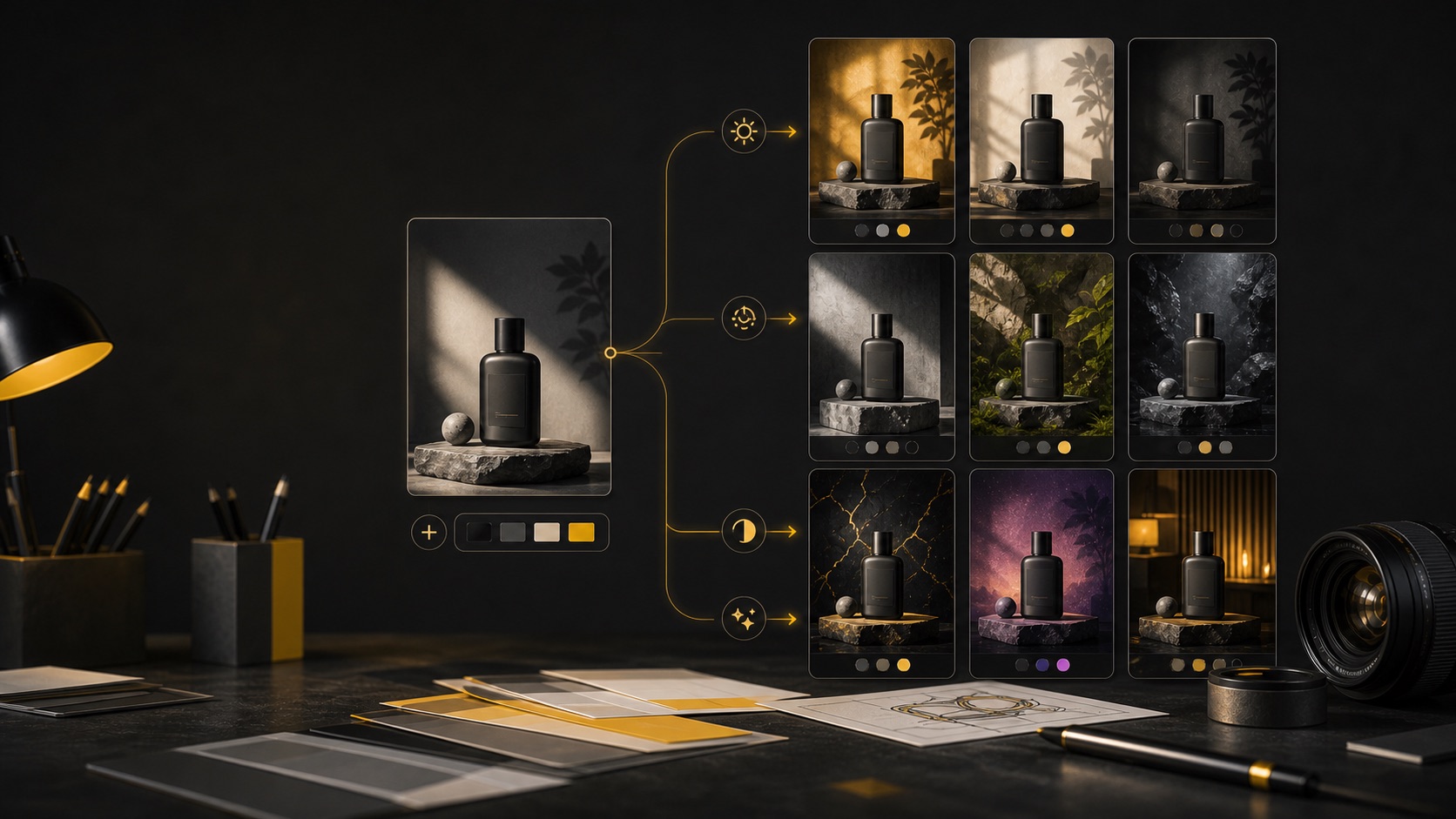
Prompt library
12 safe Nano Banana reference prompts
Use these prompt cards as starting points. Replace bracketed details, keep the authorization boundary, and compare each result against the reference before scaling a batch.
Reference pattern 1
Product reference campaign variant
For owned or licensed product photos that need new commercial scenes while preserving product truth.
Use my authorized product reference image. Preserve the product shape, label placement, cap, color, material, scale, and camera angle. Change only the surrounding scene to [new setting] with [lighting style] and clean copy space on [area]. Keep the product accurate and realistic. Do not add third-party logos, fake ratings, marketplace badges, counterfeit cues, or unsupported claims.
It names product accuracy as the stable anchor before asking for a new campaign environment.
Adapt with
- - setting: clean studio table, warm kitchen counter, marble bathroom, outdoor patio
- - lighting: diffused daylight, softbox, morning window light, subtle rim light
- - format: 1:1 store image, 4:5 paid social, email hero, landing page crop
Reference pattern 2
Original character pose variant
For creator-owned character sheets, mascots, NPCs, avatars, or story concepts.
Use my original character reference. Preserve the character's face shape, hairstyle, outfit silhouette, color palette, signature accessory, and personality cues. Create a new [pose] in [setting] with the same design identity. Do not imitate a celebrity, real private person, protected franchise character, adult/NSFW version, or deceptive identity context.
It distinguishes original character continuity from unsafe likeness or IP copying.
Adapt with
- - pose: three-quarter stance, sitting at desk, walking, presenting, action-ready
- - setting: creator studio, fantasy town, clean profile background, game UI concept
- - anchor: hair shape, outfit silhouette, palette, accessory, expression range
Reference pattern 3
Reference outfit or accessory change
For original characters or authorized portraits when only wardrobe, prop, or styling should change.
Use my authorized reference. Preserve identity, face structure, body shape, pose language, and core silhouette. Change only [outfit or accessory] to [new direction] while keeping the visual tone consistent. Do not alter age, body type, identity, ethnicity, or add NSFW, public-figure imitation, or false professional credentials.
It narrows the task to styling and blocks identity or body manipulation.
Adapt with
- - change target: jacket, hat, prop, color accent, seasonal accessory
- - direction: casual creator, clean business, adventure gear, warm winter look
- - review: identity match, dignity, rights, final use context
Reference pattern 4
Interior layout consistency
For decor concepts, room mood boards, and non-deceptive property styling drafts.
Use my authorized interior reference. Preserve the room layout, window placement, doors, permanent fixtures, floor plan, perspective, and scale. Adjust the styling toward [decor direction], improve daylight, and reduce clutter while keeping the space truthful. Do not add rooms, hide structural issues, invent premium fixtures, or create misleading real estate proof.
It separates decor exploration from deceptive property alteration.
Adapt with
- - decor direction: warm minimal, Scandinavian, neutral staging, cozy reading corner
- - allowed edit: furniture styling, soft light, color palette, removable clutter
- - protected facts: floor plan, windows, doors, fixtures, room dimensions
Reference pattern 5
Brand-safe visual identity reference
For original brand boards, creator identities, or internal style references without copying protected brands.
Use my original brand mood reference. Preserve the general palette, spacing rhythm, material feel, and clean composition. Create a new visual direction for [asset type] with original shapes and neutral placeholder marks. Do not copy protected logos, trade dress, named brand campaigns, official seals, certification badges, or affiliation cues.
It lets teams reuse their own design direction without turning the prompt into trademark copying.
Adapt with
- - asset type: launch graphic, profile header, label mockup, ad concept, social template
- - anchor: palette, spacing, material, mood, composition rhythm
- - safe mark: abstract shape, placeholder badge, text-free logo zone
Reference pattern 6
Reference-to-poster background
For turning an authorized photo into a poster or campaign background while preserving factual cues.
Use the authorized reference as the visual base. Preserve the main subject, perspective, important factual details, and composition strength. Transform it into a poster-ready background with [mood], [palette], clear focal area, and clean headline space. Do not imply official organizer approval, sponsor backing, public-figure endorsement, ticketing proof, or protected mark usage.
It routes the reference into a layout task and keeps claims outside the generated image.
Adapt with
- - mood: cinematic, calm editorial, playful launch, premium event, civic poster
- - headline space: top third, center band, lower block, side column
- - format: 4:5 poster, 9:16 story, 16:9 banner, print draft
Reference pattern 7
Product color and material match
For product or object references where color and material need to stay stable across variants.
Use my authorized product reference. Preserve the exact product color family, material texture, shape, scale, and important surface details. Change only [background or light] to [direction]. Keep reflections natural and avoid changing label content or product features. Do not invent new ingredients, sizes, ratings, medical claims, or platform approval.
It tells the model what consistency means for a product: not vibe, but visible facts.
Adapt with
- - material: glass, ceramic, matte plastic, brushed metal, fabric, paper label
- - light: bright studio, soft shelf, warm home, muted editorial, outdoor shade
- - review: color drift, label distortion, scale errors, false claims
Reference pattern 8
Portrait background reference
For authorized team photos, creator portraits, and profile images that need a cleaner setting.
Use my authorized portrait reference. Preserve identity, facial structure, expression, hair, clothing, pose, and natural skin texture. Replace the background with [background type] and improve light balance while keeping the person realistic. Do not change age, body shape, identity, ethnicity, credentials, or add NSFW, public-figure imitation, or deceptive context.
It makes the allowed edit clear: background and light, not identity.
Adapt with
- - background: neutral studio wall, soft office blur, clean creator workspace, simple gradient
- - crop: profile avatar, website bio, team page, social header
- - tone: approachable, crisp, editorial, warm, professional
Reference pattern 9
Style board without protected style copy
For using a self-made mood board to keep a campaign visually coherent.
Use my original mood board reference. Preserve the broad palette, contrast level, lighting mood, texture, and composition rhythm. Generate a new [asset type] that feels consistent with this internal direction. Do not copy a named living artist, protected brand campaign, film identity, logo system, or trademarked visual language.
It translates consistency into design attributes instead of unsafe style-copy language.
Adapt with
- - asset type: hero image, campaign tile, product scene, poster background, thumbnail
- - attributes: palette, contrast, texture, light direction, spacing, depth
- - boundary: no named living artist, no brand clone, no exact campaign imitation
Reference pattern 10
Thumbnail subject consistency
For creator thumbnails where the subject should stay readable across multiple drafts.
Use my authorized thumbnail reference. Preserve the main subject, identity or product facts, framing intent, and high-contrast focal area. Create a new [thumbnail variation] with cleaner background, stronger subject separation, and room for a short title. Do not add fake platform UI, fake results, exaggerated before/after proof, real-person impersonation, or NSFW cues.
It keeps the subject readable while avoiding deceptive thumbnail tactics.
Adapt with
- - variation: brighter background, tighter crop, stronger outline, new accent color
- - format: 16:9 YouTube, 1:1 social preview, 4:5 feed
- - review: click clarity, truthful claim, identity match, text-safe area
Reference pattern 11
UI screenshot or device reference
For app, website, or SaaS mockup visuals where interface facts should stay accurate.
Use my authorized screenshot or device mockup reference. Preserve the interface structure, product name, visible copy, layout hierarchy, and device orientation. Improve lighting, reduce glare, straighten perspective, and place it in [background]. Do not invent customer data, analytics results, partner badges, security claims, or official platform endorsement.
It improves presentation quality while keeping proof-like UI details honest.
Adapt with
- - background: neutral desk, soft gradient, product launch stage, app store style scene
- - edit: straighten, reduce glare, brighten screen, add natural shadow
- - boundary: no fake metrics, no fake logos, no invented user data
Reference pattern 12
Series consistency check prompt
For planning several generated drafts around one reference without claiming perfect sameness.
Use the authorized reference as the consistency anchor for a small draft series. Preserve [stable anchors] across each version and change only [one variable] per generation. Keep all outputs in the same [format or campaign direction]. After each result, compare identity, product facts, composition, color, and claim accuracy against the reference. Do not claim perfect consistency or skip human review.
It turns consistency into a controlled review loop instead of a guarantee.
Adapt with
- - stable anchors: character silhouette, product shape, room layout, palette, camera angle
- - one variable: background, pose, crop, season, lighting, accent color
- - review checklist: identity, product facts, rights, text, claims, platform fit