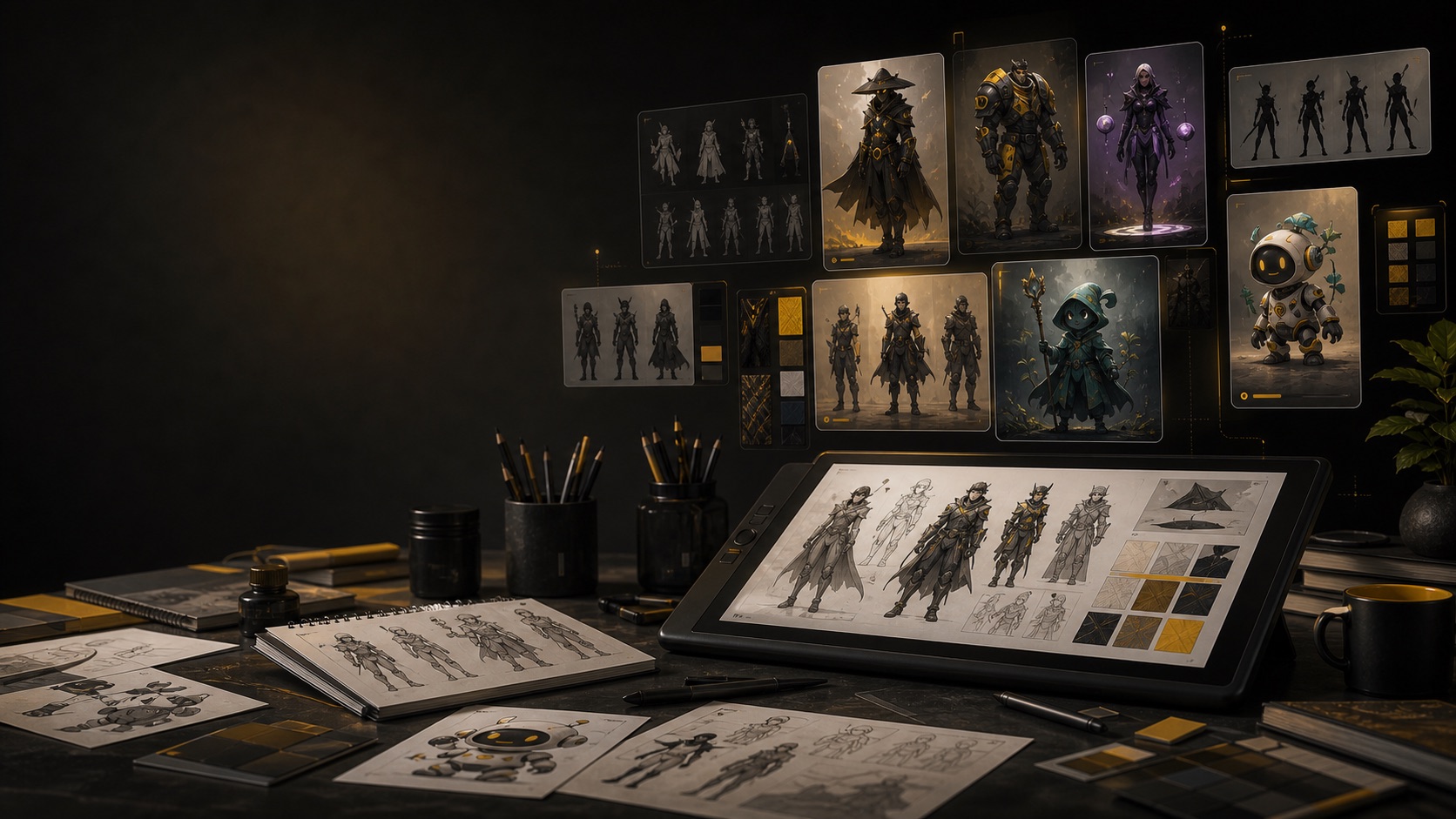
Nano Banana Character Prompts for Original Character Concepts

A practical prompt guide for original character design, mascot ideas, avatars, story concepts, and consistent variations. Use these examples as safe creator workflows inside Try Banana AI, not as a way to copy protected characters or real people.

Try Banana AI is independently operated. This page is a safe prompt tutorial for original characters, not an official model-provider prompt library.

Image Generator

Test a character prompt

Start with role, silhouette, outfit, expression, pose, setting, and use case. Sign-in is only required before generation, saved history, or credit spend.

0 / 2000

Try a prompt:

Good character prompts are design briefs, not style tags

People search for Nano Banana character prompts because they want character examples that feel usable, consistent, and safe to adapt. The useful version is not a list of famous names, protected franchises, or vague style labels. A strong character prompt works like a compact design brief: it defines the role, silhouette, personality, outfit, pose, world, framing, and the exact detail that should stay stable across variations. Try Banana AI is best used for original character exploration. Start with text-to-image when the idea is loose, save the strongest prompt and image, then use image-to-image when you want controlled variations. That loop helps you compare designs without pretending that any model can guarantee perfect identity consistency from one line of text. This page focuses on safe, reusable character prompts for avatars, mascots, game concepts, tabletop NPCs, story characters, creator personas, and campaign key visuals. The examples avoid adult or explicit content, minors in sensitive contexts, public-figure likeness, impersonation, protected IP or trademark copying, and safety-bypass wording.

Name the character job

Say whether you need a mascot, avatar, NPC, story hero, product character, creator persona, or campaign key visual.

Anchor the design

Give stable cues such as silhouette, outfit shape, palette, expression, accessory, and body language before asking for style.

Iterate one cue at a time

Change pose, background, crop, lighting, or costume one pass at a time so you can compare results and save credits.

Keep it original and reviewable

Avoid prompts that request protected characters, famous likenesses, real-person imitation, explicit content, or unsafe workarounds.

A character prompt formula you can reuse

Use this order before trying the examples: role + personality + silhouette + outfit + expression + pose + world + framing + style + consistency boundary.

Role and purpose

Start with the character's job in the project: game NPC, mascot, avatar, comic sidekick, product guide, story explorer, or poster lead.

Silhouette and outfit

Describe the big readable shapes first: round mascot, tall coat, compact armor, oversized hoodie, utility jacket, cape, satchel, or boots.

Personality and expression

Use plain words such as curious, calm, brave, shy, precise, playful, tired, or confident. Then choose one readable expression.

Pose and framing

Choose portrait, half-body, full-body, turnaround feel, character sheet, avatar crop, or scene illustration before style details.

World and palette

Give the setting and color rules: cozy workshop, forest path, space garage, school club room, muted greens, warm neutrals, or high-contrast neon.

Safety and originality boundary

Ask for original design cues and no public-figure resemblance, no protected character imitation, no extra logos, and no explicit content.

Prompt Library

12 safe Nano Banana character prompt patterns

Use these prompts as reusable starting points. Replace the bracketed details, keep the character original, and test one design cue at a time.

Pattern 1

Original game protagonist

For early game, comic, or story hero concepts without copying a known character.

Original game protagonist concept of [role], clear full-body silhouette, [personality] expression, practical outfit with [two design details], standing pose, [world/setting] background, cohesive color palette of [colors], polished concept art, no real-person likeness, no copyrighted character imitation.

It defines role, readable shape, personality, outfit anchors, setting, palette, and originality boundary.

Adapt with

  • - role: forest courier, space mechanic, city healer
  • - details: satchel, utility belt, glowing map
  • - palette: moss green/gold, navy/orange, black/lime
Pattern 2

Cozy mascot character

For brand-safe mascots, app guides, sticker concepts, and friendly social visuals.

Original cozy mascot character for [product or community], simple rounded silhouette, friendly face, tiny [accessory], soft 3D illustration, clean background, warm lighting, full-body view, expressive but not human-like, no existing mascot imitation, no logos.

It keeps the design simple, friendly, and usable without claiming a protected mascot style.

Adapt with

  • - accessory: backpack, scarf, pencil, lantern
  • - mood: cheerful, calm, helpful
  • - format: full-body, sticker pose, avatar crop
Pattern 3

Tabletop NPC portrait

For campaign notes, worldbuilding boards, and story planning.

Original tabletop NPC portrait of [role], age range [range], distinctive but realistic face, [outfit cue], [emotion] expression, [setting] atmosphere, painterly fantasy portrait, soft directional light, no celebrity resemblance, no protected franchise references.

It creates a useful portrait brief while avoiding real-person or franchise shortcuts.

Adapt with

  • - role: archivist, ferry captain, healer, mapmaker
  • - emotion: suspicious, kind, focused, amused
  • - setting: library, harbor, market, mountain pass
Pattern 4

Character sheet starter

For comparing a design before deciding which draft to refine.

Original character sheet for [character role], front view plus two small pose variations, consistent outfit silhouette, clear color palette, simple props, neutral background, readable design notes as visual cues only, concept art sheet feel, no random text, no copied character.

It asks for comparison-friendly views and stable design anchors instead of a single dramatic render.

Adapt with

  • - views: front, three-quarter, action pose
  • - props: notebook, wrench, staff, camera
  • - style: clean 2D, soft 3D, comic concept
Pattern 5

Consistent character variation

For making a second scene from a character draft while preserving identity cues.

Using the same original character design cues: [hair shape], [outfit silhouette], [main colors], and [signature accessory], create a new scene in [environment]. Keep the face shape, outfit shape, and palette consistent. Change only pose, camera framing, and background mood. No extra characters.

It tells the model what to preserve and limits the variation to pose, framing, and scene.

Adapt with

  • - environment: cafe table, rooftop, forest trail
  • - pose: waving, reading, presenting, running
  • - mood: calm, bright, mysterious, energetic
Pattern 6

Avatar crop

For profile images, creator handles, community badges, or lightweight personas.

Original avatar portrait of [character type], centered head-and-shoulders crop, readable face and hair silhouette, [expression] expression, simple background shape, clean lighting, strong contrast at small size, no real-person likeness, no platform logo, 1:1 aspect ratio.

It optimizes for small-size readability and avoids identity or logo confusion.

Adapt with

  • - character type: inventor, guide, chef, student
  • - expression: curious, calm, focused, welcoming
  • - background: circle, gradient panel, soft room
Pattern 7

Comic side character

For narrative worlds where the side character needs clear personality.

Original comic side character, [role] with [personality trait], expressive posture, distinctive outfit silhouette, simple prop that explains their job, clean line-art inspired illustration, [setting] background, balanced colors, no existing comic character imitation.

It ties personality to posture, costume, and prop so the character reads quickly.

Adapt with

  • - role: delivery rider, lab assistant, gardener
  • - trait: nervous, optimistic, precise, bold
  • - prop: clipboard, plant tray, tool pouch
Pattern 8

Product character guide

For safe product education visuals where the character supports a workflow.

Original product guide character for [product category], friendly non-celebrity person, simple outfit in [colors], showing [safe product use scene], clear hands and product visibility, warm commercial lighting, clean background, no medical or legal claims, no brand imitation.

It keeps the character tied to a product scene while avoiding unsupported claims and brand copying.

Adapt with

  • - category: planner app, travel mug, desk lamp
  • - scene: packing, organizing, presenting
  • - colors: brand-safe palette without logos
Pattern 9

Creature companion

For original fantasy companions, pet-like mascots, and worldbuilding concepts.

Original friendly creature companion for [world], small readable silhouette, [two physical traits], gentle expression, simple pose beside a neutral object for scale, soft natural lighting, whimsical concept art, no scary gore, no existing creature franchise imitation.

It gives scale, mood, physical traits, and originality without turning into a protected creature copy.

Adapt with

  • - world: forest library, sky market, moon farm
  • - traits: leaf ears, glassy fins, tiny antlers
  • - scale object: mug, book, backpack
Pattern 10

Poster-ready character key visual

For campaign posters or story key art where composition matters.

Poster key visual featuring an original [character role], dynamic but readable pose, strong silhouette, dramatic lighting, clear empty space for title text, [setting] background, limited palette of [colors], cinematic composition, no random text, no protected IP reference, 4:5 aspect ratio.

It reserves title space and focuses on a safe original character rather than copied franchise cues.

Adapt with

  • - role: explorer, mechanic, musician, courier
  • - setting: workshop, rooftop, train station
  • - title area: top, left third, bottom band
Pattern 11

Reference-based character refinement

For image-to-image edits after you have one approved original draft.

Use the reference image as the source. Keep the original character's face shape, outfit silhouette, main colors, and signature accessory unchanged. Improve [specific issue] by changing only [one variable]. Preserve the camera angle and character identity cues. No extra characters, no copied IP details.

It separates keep rules from the single change request, which is essential for controlled character edits.

Adapt with

  • - issue: weak lighting, busy background, unclear pose
  • - variable: background, pose, crop, expression
  • - keep cues: hair shape, coat, satchel, palette
Pattern 12

Style exploration without copying

For testing visual directions while avoiding named artist or protected brand style prompts.

Original character concept of [role], same design brief, explore a [visual direction] look: [medium cues], [lighting], [texture], clear silhouette, consistent outfit cues, no named artist imitation, no protected brand or franchise style copying.

It describes visual qualities directly instead of relying on unsafe or misleading named-style shortcuts.

Adapt with

  • - visual direction: soft 3D, graphic novel, painterly fantasy
  • - medium cues: clean shapes, brush texture, rim light
  • - texture: paper grain, clay-like forms, polished concept art
Before / After

Rewrite vague character prompts into safer briefs

A useful character prompt gives the model design constraints. These examples show how to move from risky or vague wording into original, reviewable prompts.

From famous shortcut to original design

Weak version

Make a character like a famous movie hero.

Better version

Original adventure character, brave expression, weathered travel coat, compact backpack, warm torchlight, mountain pass background, strong silhouette, no public-figure likeness, no protected character imitation.

The improved version replaces a protected shortcut with role, mood, outfit, scene, and originality boundaries.

From style tag to character brief

Weak version

Cute mascot, 3D, nice colors.

Better version

Original cozy mascot for a study app, rounded leaf-shaped silhouette, tiny backpack, friendly face, soft 3D illustration, mint and warm yellow palette, clean full-body view, no existing mascot imitation.

It adds purpose, silhouette, accessory, palette, framing, and safety boundary.

From broad consistency wish to keep/change rules

Weak version

Make the same character in another pose.

Better version

Use the reference character. Keep the face shape, moss-green cloak, short boots, lantern accessory, and warm palette unchanged. Change only the pose to walking forward on a forest path. Preserve full-body framing.

It names the identity cues to preserve and limits the edit to one change.

Safety boundaries for character prompt work

Character pages need stricter boundaries than generic image prompts because identity, age, fandom, and public-figure risks can appear quickly. Keep examples original, age-appropriate, non-explicit, and reviewable. For commercial use, review generated outputs for IP, trademark, marketplace, and platform policy fit before publishing.

Do not copy protected characters

Describe original design traits instead of asking for a known fictional character, franchise, logo, uniform, or trademark look.

Avoid real-person likeness

Do not request public figures, private individuals, influencers, or deceptive identity imitation. Use original non-celebrity characters.

Keep prompts non-explicit

Character examples should stay suitable for broad creative use. Do not include adult, erotic, fetish, exploitative, or sexualized requests.

Review before publishing

AI output still needs human review for originality, consistency, product fit, commercial rights, and platform compliance.

Workflow

How to test character prompts in Try Banana AI

Use a controlled loop so each generation helps you decide what to preserve, change, or discard.

1

Start with the character job

Choose whether the result is for an avatar, mascot, NPC, story concept, product guide, poster key visual, or reference sheet. This keeps the prompt focused.

2

Generate a first direction

Use AI Character Generator or AI Image Generator with one complete brief. Do not change multiple details until you know which design cue is working.

3

Save design anchors

When a draft works, record the face shape, silhouette, outfit, palette, accessory, and prompt. Those anchors become your consistency instructions.

4

Refine with image-to-image

Use the strongest draft as a reference when you need a new pose, crop, background, or lighting pass while preserving the character cues.

Pricing

Start with a subscription or buy credits when you need them.

Sign in first, pay afterCheckout only starts after your account is ready.
Secure Creem checkoutPayment opens on the provider checkout page after sign-in.
Plans or top-upsChoose monthly credits or a one-time pack when a draft needs more.
Credit packs last 90 daysTop-ups stay available for image and video generation.

Starter

$19.90 / month
For light usage and trying things out.

Includes

  • 1,000 credits / month
  • Advanced image + video models
  • Image + Video generation
  • Standard support
Most Popular

Creator

$39.90 / month
Best for creators who generate every day.

Includes

  • 2,500 credits / month
  • Advanced image + video models
  • Image + Video generation
  • Priority support

Agency

$99.90 / month
For teams and heavy usage.

Includes

  • 7,500 credits / month
  • Advanced image + video models
  • Image + Video generation
  • Team-friendly usage

Nano Banana Character Prompts FAQ

Answers about original characters, consistency, references, safety boundaries, and credits.


Turn a safe character prompt into a reusable design loop

Pick a prompt pattern, generate an original character direction, then refine the strongest draft with clear keep/change instructions.